Digital Cleaning Documentation in the Pharmaceutical Industry: GMP-Compliant, Audit-Ready, and Controllable in Real Time
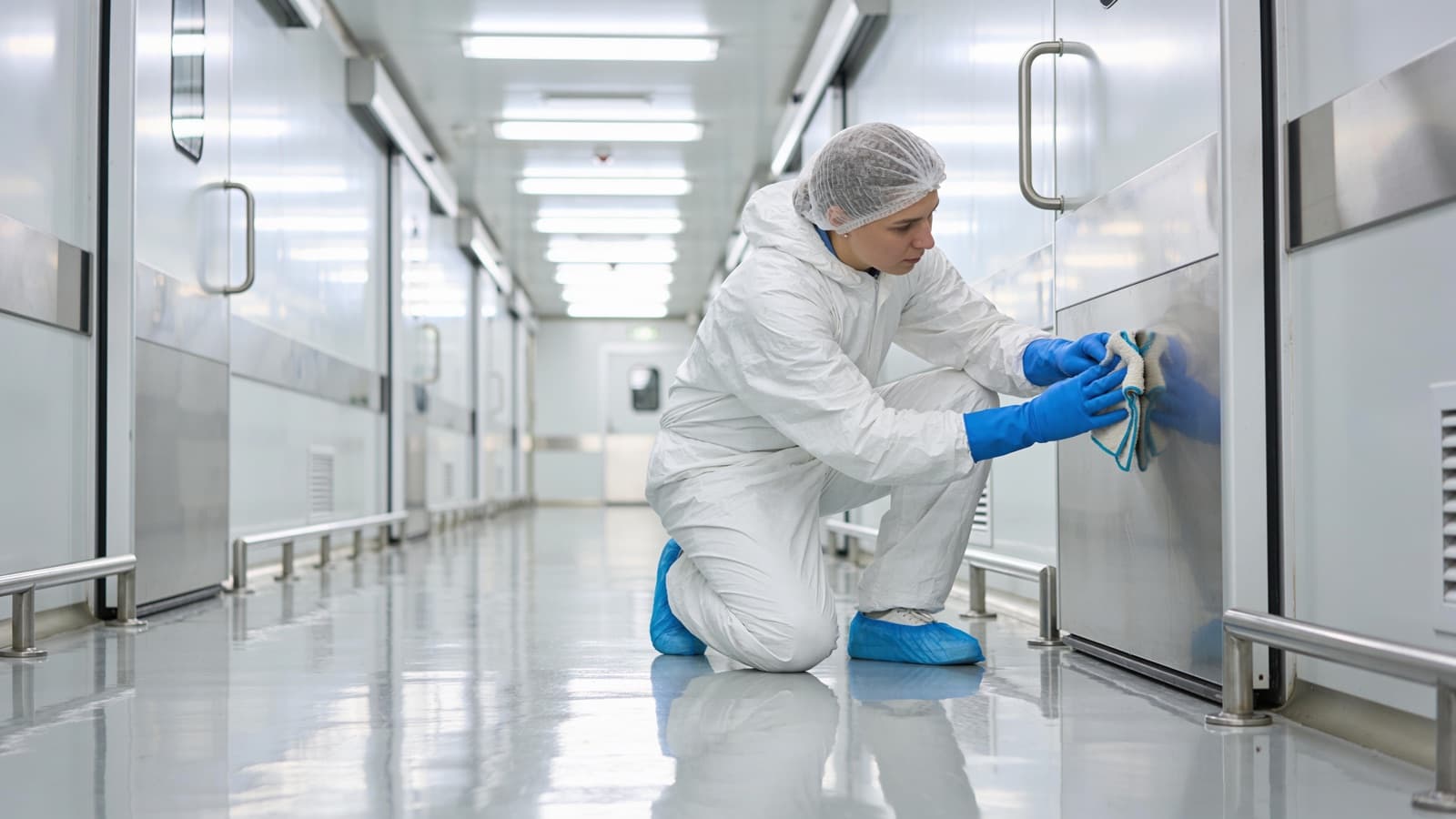
In the pharmaceutical industry, cleaning is far more than an operational necessity. It is an integral part of quality assurance and therefore directly linked to regulatory requirements. Whether in cleanrooms, production areas, laboratories, or technical zones, every completed cleaning task must be documented in a traceable way. What matters is not only that cleaning took place, but who performed it, when it happened, where it was carried out, and whether the process followed the relevant SOP.
Despite this, many organizations still rely on paper forms, Excel sheets, or documentation completed after the fact. This often leads to media breaks, incomplete records, and increased audit risk. Especially across multiple sites or with external cleaning service providers, real-time transparency is often missing. This is exactly where digital cleaning documentation in pharma creates value.
GMP Requirements and Data Integrity in Practice
Good Manufacturing Practice (GMP) defines clear requirements for process documentation. Entries must be made promptly, be clearly attributable, and must not be open to manipulation. Corrections need to be documented in a traceable way without deleting the original entry. At the center is data integrity, often framed through the ALCOA principle. Data must be attributable, legible, contemporaneous, original, and accurate.
Paper-based systems can only meet these requirements to a limited extent. It becomes especially critical when documentation is entered late or when it remains unclear whether cleaning actually occurred at the intended asset. Digital systems provide a structured foundation by automatically capturing timestamps, uniquely identifying users, and documenting changes through an audit trail.
QR Code Time Tracking at Pharma Sites
A key building block of modern cleaning documentation is location-bound time tracking via QR code. A unique code is placed at each asset or zone, and employees scan it at the start and end of their task. Check-in is automatically linked with a timestamp, the associated object, and the person performing the work. Optional location verification can also be added.
This creates complete, object-level time tracking that goes far beyond classic clocking methods. The system documents not only how long work was performed, but also where it took place. Asset mix-ups, unclear assignments, and retroactive time entries are significantly reduced. For implementation details, see the page on QR code time tracking.
Real-Time Alerts for Missing Assignments
A frequently underestimated risk in pharma is that scheduled cleanings are missed or delayed. If a cleaner does not show up at the assigned location, production timelines can be affected and, in the worst case, GMP deviations may result. In analog processes, such incidents are often detected only afterwards.
Digital systems enable immediate reaction. If no check-in occurs at the planned time, operations management is automatically notified. This real-time alert enables instant rescheduling, assignment of backup staff, or formal deviation documentation. A potential weak point becomes a controllable process.
SOP-Guided Cleaning Workflows and Structured Evidence
Beyond time tracking, the content-level documentation of cleaning is equally important. In regulated environments, recording only start and end times is not enough. It must be ensured that cleaning was performed according to the valid Standard Operating Procedure.
Digital solutions can map SOP-based workflows with clearly defined steps, mandatory fields, and optional photo documentation. Employees are guided through the process so that critical checkpoints are not skipped. Interval tasks can be automated and flagged when overdue. The result is a consistent, standardized, and audit-ready cleaning documentation process.
Audit Trail and Transparent Reporting
Another advantage of digital systems is transparent traceability of changes. The integrated audit trail documents who made which adjustment and when it was made. This makes even corrections compliant with regulatory expectations. For internal reviews or external audits, audit-proof reports can be exported by asset, zone, or time period. The structured availability of this data significantly reduces effort during audits.
This creates a new level of visibility especially for QA and QM teams. Instead of consolidating information from multiple sources, they can rely on a central platform that links cleaning evidence, time data, and deviations.
Digital Cleaning Documentation as a Strategic Advantage
Introducing digital cleaning documentation in pharma is not only a response to regulatory requirements, but also a strategic move. Companies gain transparency across all sites, improve responsiveness to deviations, and reduce administrative workload. At the same time, collaboration between operations and quality management improves.
Especially in complex environments with multiple cleanrooms, shift operations, and external providers, the combination of QR code time tracking, real-time alerts, and audit trail functionality creates a robust foundation for GMP-compliant processes.
Conclusion
In the pharmaceutical industry, digital cleaning documentation has long gone beyond an efficiency topic. It is a central element of modern quality and compliance strategies. By combining location-specific time tracking, SOP-guided workflows, and real-time assignment control, organizations build a transparent, traceable, and audit-ready process landscape. Companies adopting digital solutions reduce risk, improve process reliability, and strengthen operational control.