
What digital patrols cover
One goal: every patrol is provable – and deviations stand out immediately, not at the end of the month.
Checkpoints
Recorded via NFC tag, QR code or Bluetooth beacon – the beacon books automatically on approach.
Scheduled or free
Fixed routes with time windows and repetition – or spontaneous free patrols without a schedule.
Works offline
Scans are stored locally and synced automatically as soon as the connection is back.
Alarm on deviation
A missed patrol triggers a notification immediately – a standard rule comes prepared.
Which software solutions are suitable for planning patrol rounds in companies?
Companies plan patrol rounds digitally today — with a guard tour system that manages checkpoints, intervals, and responsibilities. Key criteria are: flexible route planning, mobile execution via app, automatic deviation alarms, and audit-proof reports.
- ✓Checkpoint planning: Place NFC, QR, or Bluetooth beacon points on site and link them in sequence.
- ✓Interval control: Daily, weekly, or monthly — with time windows, repetition, and public-holiday rules.
- ✓Mobile execution: Staff scan each checkpoint — the app guides them step by step. Also runs as a free patrol without a fixed schedule, or automatically via Bluetooth beacons without taking the phone out.
- ✓Deviation alarms: Missed scan or late patrol — LiteLog escalates according to your rules, for example to the control centre.
- ✓Tamper protection: Fake-GPS detection and plausibility checks for every scan — time, person, and location are clearly proven.
- ✓Reports: Client and audit reports automatically as PDF — with your logo, time-triggered delivery.
- ✓Industries: Security services, facility management, caretaker services, care, industrial sites.
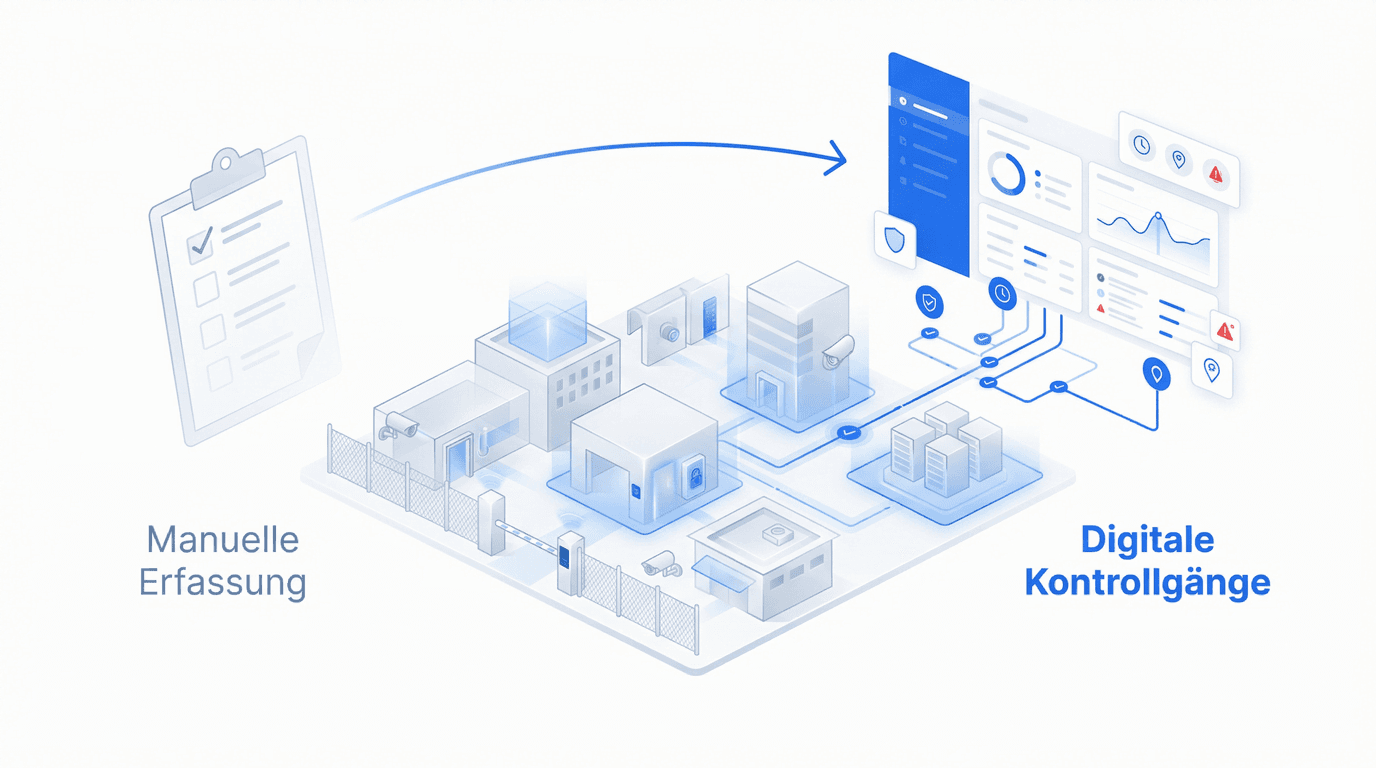
Checkpoints vs. rounds
Checkpoints are specific inspection points verified along a route – places where something needs to be checked or done regularly. You can attach tasks and forms that appear automatically on scan.
Rounds describe the entire route or process that staff regularly follow. A round can include multiple checkpoints and represents the practical workflow.
This clear distinction is important for structured evaluation of checkpoints and transparent documentation of rounds.
- ✓Three capture methods: NFC tag, QR code or Bluetooth beacon – the beacon books automatically on approach, without taking the phone out.
- ✓Tasks at the point: attached tasks and forms open on scan – the work happens where it belongs.
- ✓Use your own hardware: existing smartphones are enough; print QR codes yourself, and compatible NFC tags can be used at any time – see hardware & equipment.
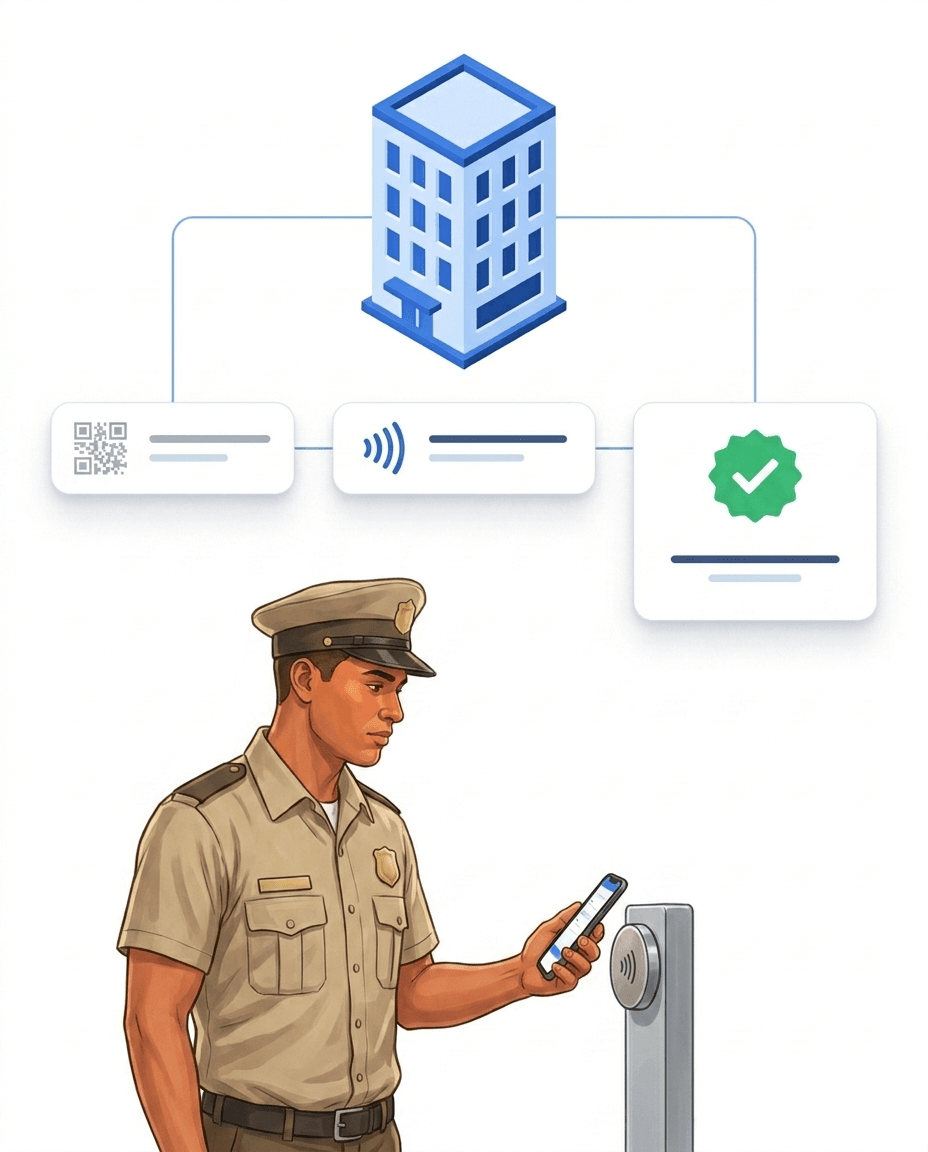
The task point: scan and see what needs doing here
Besides the patrol point there is a second point type: the task point. A scan opens the tasks and forms linked to that location — without booking a patrol. The QR or NFC point in the sanitary area shows cleaning staff the daily, night or interval tasks due there; the point in the plant room leads to the maintenance checklist. Work starts at the location — not in a list.
- ✓Scan the spot, see the work: the scan opens the linked tasks and forms for the area — including due date, checklist and photo requirement.
- ✓No patrol required: the task point does not book a patrol — it is the direct entry into the work on site.
- ✓Done is done: the status syncs for everyone — whoever scans later sees what has already been completed.

Planning and running patrols
Paper lists provide no reliable proof that checks actually happened. In LiteLog you set up patrols as fixed routes with defined checkpoints, time windows and intervals – the app guides your staff step by step through the site.
- ✓Time windows & repetition: daily, weekly or monthly – with a calendar preview; public holidays and special days are taken into account.
- ✓Order via drag & drop: arrange checkpoints and connect them into a route.
- ✓No fixed schedule needed: free patrols for spontaneous checks – started at any time, documented just the same.
- ✓Version history: changes to routes remain traceable.
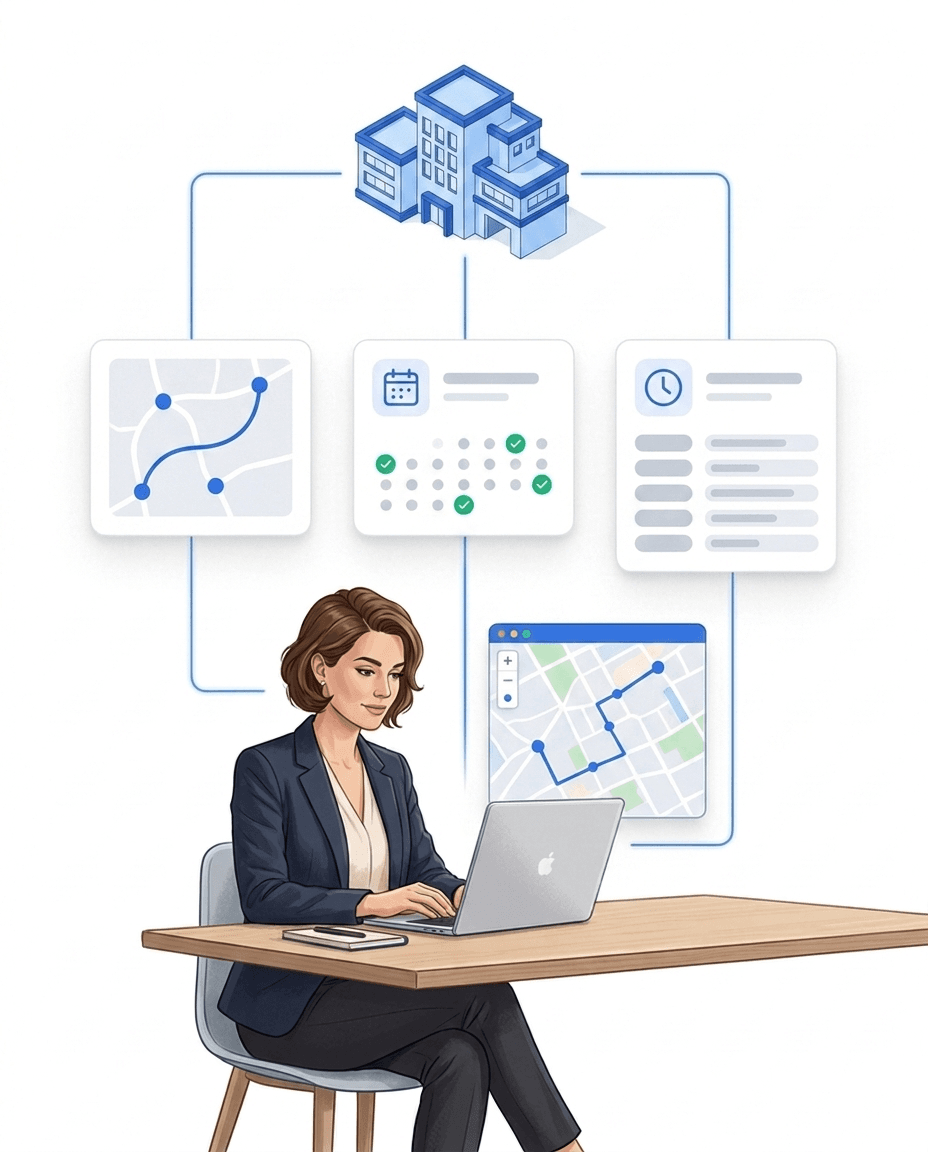
Monitor live, alert, prove
The current status of ongoing patrols can be viewed at any time – and if a patrol or checkpoint is missed, it does not go unnoticed.
- ✓Reported immediately: missed patrols and checkpoints are reported automatically once the time window has passed – via the automation you escalate by push, email, SMS or call.
- ✓Offline is no problem: scans are stored locally and synced automatically as soon as the connection is back.
- ✓Logs with map & timeline: every scan is documented audit-proof with time, user and checkpoint.
- ✓Proof for your client: export logs as PDF or release them in the customer portal – the service-level report measures the completion rate automatically.
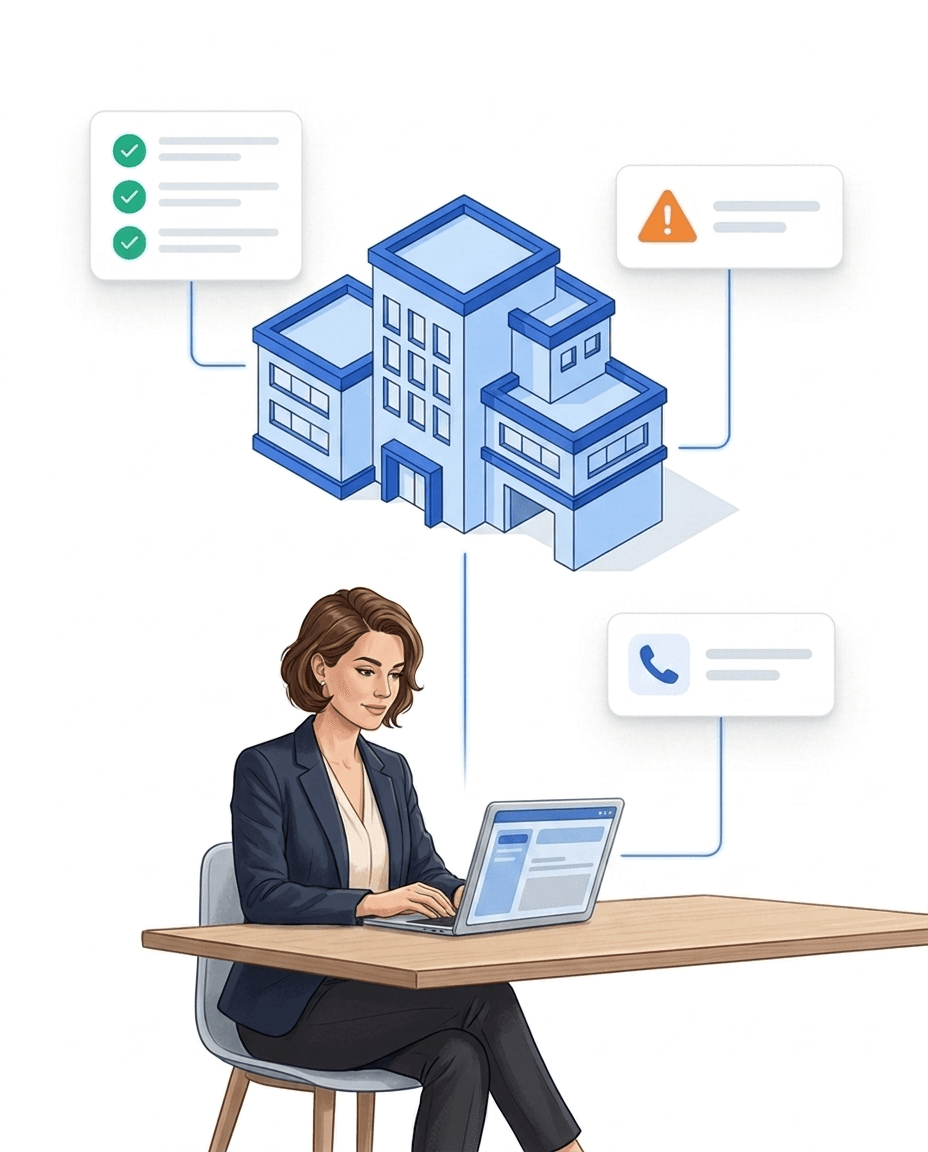
The guard-tour chain: planned, guided, proven
A patrol in LiteLog is not an isolated feature but a chain from planning to client proof. If something is missed along the way, automation rules take over — and at the end of the month the service-level report measures the completion rate automatically. See how patrols, alerting and reports work together in the guard tour system overview.
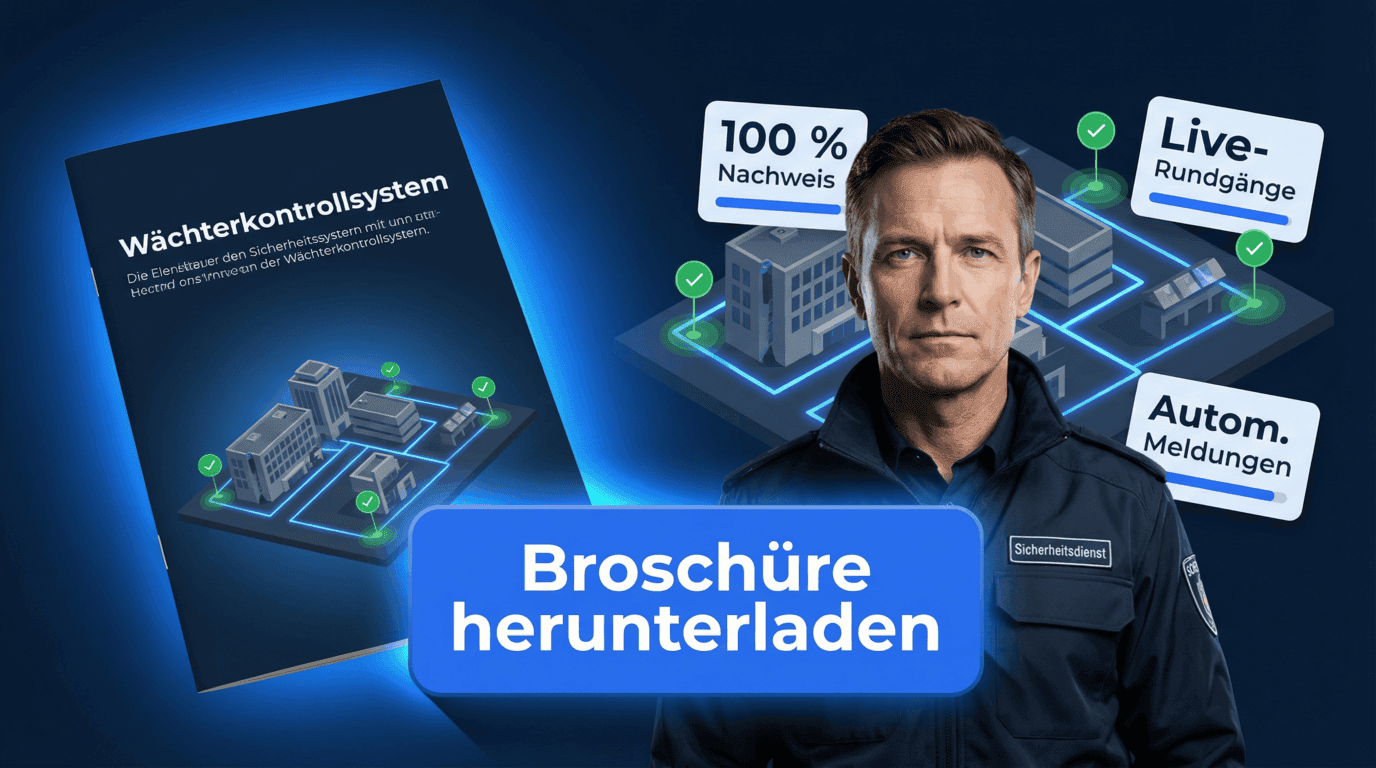
Brochure on patrols & rounds
Plan routes, verify checkpoints, and document proof with confidence.
Structure routes and checkpoints clearly
See live status and deviations instantly
Export evidence for audits and clients
FAQ
Frequently Asked Questions about Digital Patrols and Rounds
What are patrols?
Patrols are structured security checks in which predefined checkpoints are inspected. The goal is to verifiably control security-relevant areas and identify deviations.
What are rounds?
Rounds describe the entire route or process that security personnel regularly follow. A round can include multiple checkpoints and represents the practical workflow of security inspections.
What is the difference between a patrol and a round?
A patrol focuses on checking individual checkpoints. A round describes the complete route along which those checkpoints are visited.
How are rounds documented digitally?
In digital rounds, checkpoints are recorded via NFC tag, QR code, or Bluetooth beacon. Each scan is automatically stored with a timestamp, user, and location.
Can rounds be monitored in real time?
Yes. The status of ongoing rounds can be viewed at any time. Missed checkpoints and rounds are reported automatically once their time window has passed and can trigger alarms.
Which areas are suitable for digital rounds?
Digital rounds are suitable wherever recurring duties need to be completed with proof: in security services for site protection, mobile patrols, construction site monitoring, and plant security — as well as in facility management, caretaker services, care facilities, hotels, gyms, and industrial plants, for example for maintenance rounds or meter readings.
Are digital patrols documented in an audit-proof way?
Yes. All data is logged in an audit-proof way with timestamps, checkpoints, and users and can be used for audits, evidence, or client reports.
Do I need special hardware for the guard tour system?
No. LiteLog’s guard tour system can be used with existing smartphones (Android or iOS). Additional hardware such as NFC tags, cards, or fixed checkpoints is optional. Alternatively, QR codes can be created, printed, and used easily. Your own compatible devices and NFC chips can be used at any time. 👉 More about hardware & equipment with LiteLog
Can a scan directly show the tasks of an area?
Yes. Besides the patrol point there is the task point: scanning the QR or NFC point opens the tasks and forms linked to that location without booking a patrol. Cleaning staff in the sanitary area instantly see the daily or interval tasks due there — including due dates and photo requirements.