ALCOA+ Principles: What Data Integrity Means — and How Service Providers Implement It
ALCOA+ stands for the nine data integrity principles applied to records in regulated environments: Attributable, Legible, Contemporaneous, Original, Accurate — plus Complete, Consistent, Enduring and Available. The acronym originated in FDA inspection practice in the early 1990s and has since become the international benchmark used by the FDA, EMA, WHO and MHRA when they inspect GMP and GxP documentation. Anyone providing services at pharmaceutical, laboratory or other regulated sites is measured against it — including cleaning and facility service providers.
The nine principles at a glance
| Principle | Meaning |
|---|---|
| Attributable | Every entry can be traced to the person or system that created it |
| Legible | Records stay readable over their entire lifecycle |
| Contemporaneous | Data is captured at the moment of the activity, not afterwards |
| Original | The first capture is preserved; copies are marked as such |
| Accurate | Entries are correct; corrections are traceable with a reason |
| + Complete | Nothing is missing — including corrections and late entries |
| + Consistent | The chain of events is chronologically coherent |
| + Enduring | Records survive for the full retention period |
| + Available | Records can be produced at any time during an audit |
Why cleaning documentation is affected
In GMP-regulated companies, cleaning is part of quality assurance. Whoever cleans laboratories, technical areas or production perimeters must be able to prove who cleaned which area, when, and according to which procedure. During a client audit or QA spot check, paper forms and spreadsheets regularly fail exactly those criteria: entries are filled in afterwards, corrections overwrite the original, and nobody can prove completeness.
How LiteLog supports the ALCOA+ principles
LiteLog documents cleaning and service activities according to the ALCOA+ data integrity principles:
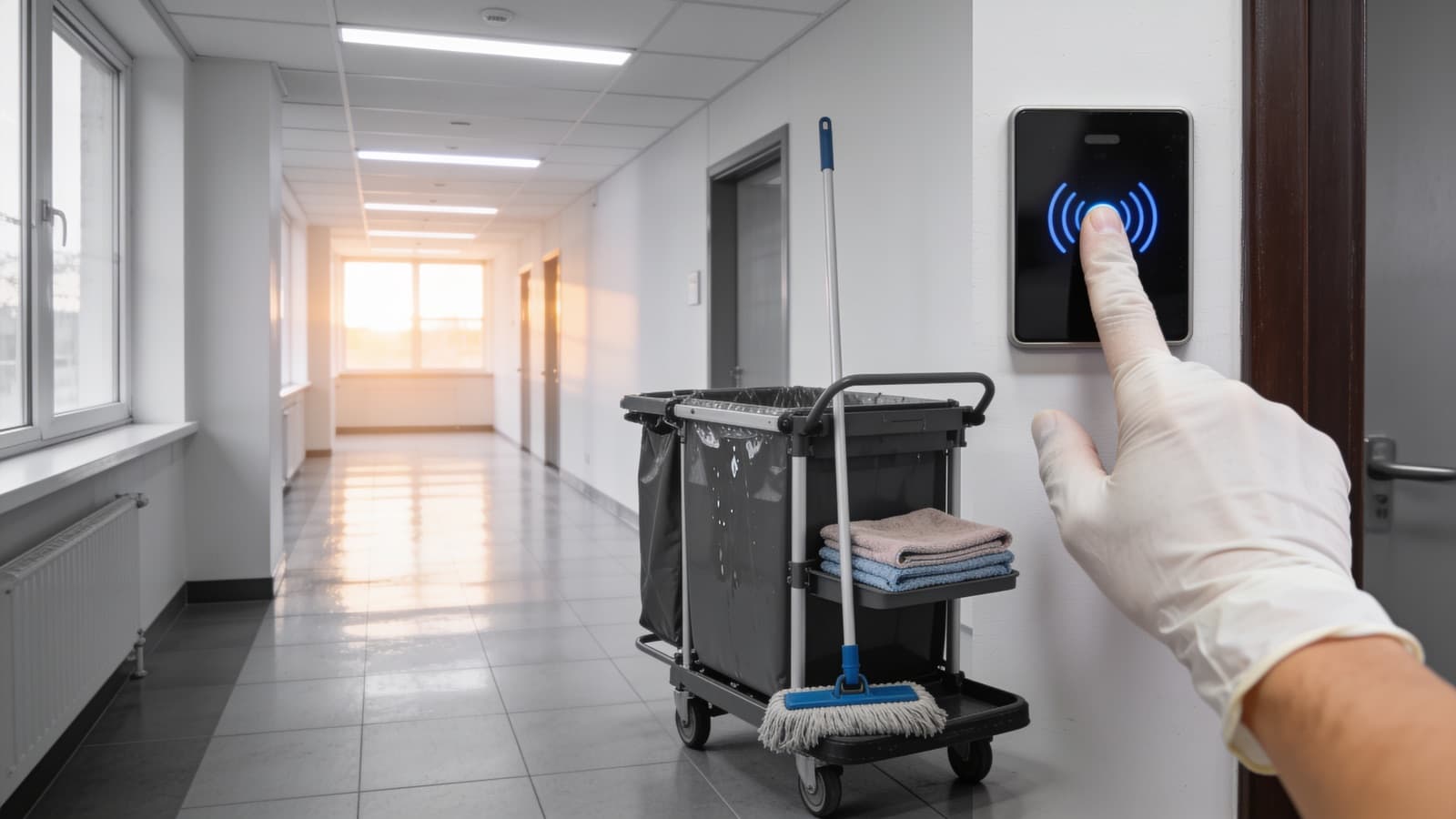
- Attributable: Every activity is captured with person, area and time — via NFC, QR or GPS directly at the place of work.
- Contemporaneous: Capture happens in the moment; the server additionally records its own receipt timestamp, independent of the device clock.
- Original & Accurate: Saved entries are never overwritten. A correction creates a new record referencing the original — with a mandatory reason for the change.
- Complete & Consistent: Late-arriving entries are preserved instead of dropped, and the event chain remains chronologically coherent.
- Enduring & Available: Histories survive reorganisations; audit-ready PDF reports per area and period are available at the push of a button.
One honest distinction matters: LiteLog is deliberately not a validated GxP system under EU GMP Annex 11 or FDA 21 CFR Part 11. It documents alongside your GMP documentation in non-classified areas — unclassified laboratories, technical and storage areas, corridors and offices. That is precisely why it can be introduced without a validation project.
What service providers gain
Providers who document according to ALCOA+ principles speak the language of their clients' quality assurance. Audit preparation shrinks from days to the press of a button, disputes about performed services end with the server timestamp, and in tenders for regulated sites, demonstrable data integrity becomes a differentiator few competitors can match.
Read more in our glossary entry on ALCOA+, on the Pharma & Life Sciences industry page, or in the article on digital cleaning documentation in the pharmaceutical industry.