
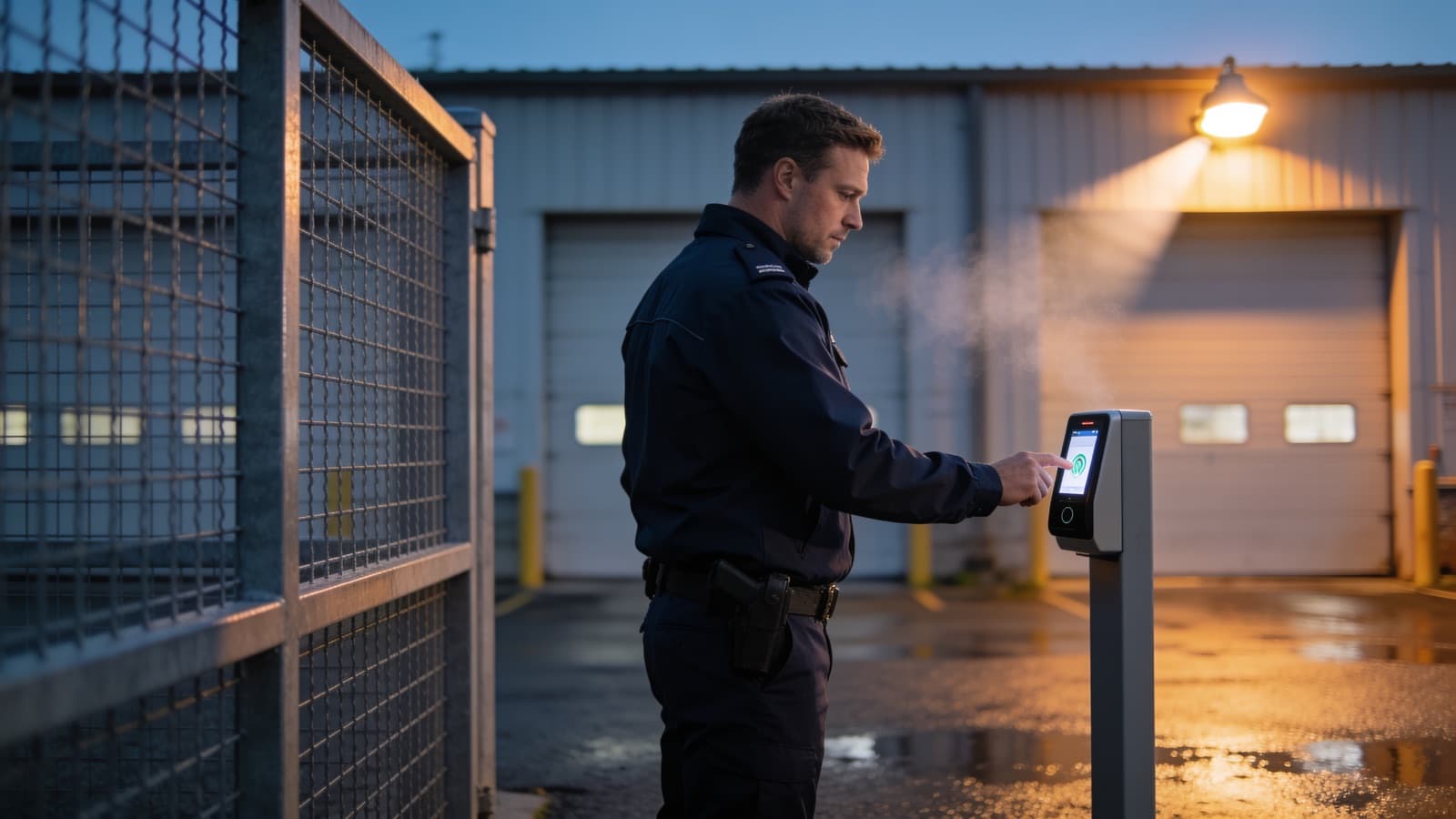
Guard Tour System App – The Modern Solution for Digital Patrols
A modern guard tour app replaces legacy guard tour systems with smartphone-based workflows. Instead of expensive specialized devices, guards use NFC and QR code checkpoints, live tracking, incident capture, and automated reports — all from a standard smartphone. For the full feature overview, see our guard tour software solution page.
What Is a Guard Tour System App?
A guard tour system app digitizes patrol rounds and provides a complete evidence chain for every checkpoint visited. Where security teams once relied on mechanical clocks, key cylinders, or bulky handheld terminals, a modern system runs on smartphones and cloud technology.
NFC or QR code checkpoints record each location and timestamp automatically. All data appears in a real-time dashboard, enabling immediate response to missed patrols or incidents — something legacy systems could never deliver.
Legacy Systems vs. Modern Guard Tour Apps
Many organizations are migrating from traditional guard tour hardware (mechanical clocks, data collectors, handheld terminals) to app-based solutions. Key differences include:
- Hardware: NFC/QR checkpoints scanned by smartphone replace mechanical clocks and key discs.
- Data transfer: Live data visible in real time, instead of delayed readouts at a PC.
- Documentation: Multimedia incident reports with photos, video, and GPS replace paper-only records.
- Cost and maintenance: No specialized hardware required — significantly lower total cost of ownership.
- Scope: Checkpoints, incident reporting, and time tracking in a single platform.
- Deployment: Cloud-based setup, operational within minutes rather than days.
How the App Works in Practice
- Scan checkpoints (NFC/QR) — Evidence is captured automatically without manual stamps or later data extraction.
- Digital routes and live tracking — Patrols are planned centrally; the system shows planned vs. actual progress and flags deviations.
- Capture incidents and defects — Guards report hazards, damage, or disruptions with photo, video, priority level, and GPS coordinates.
- Automated reports — All patrol rounds are stored in an audit-proof format and exportable as PDF or Excel.
- Offline mode — The app works reliably in parking garages, basements, or areas with poor connectivity.
Who Benefits from a Guard Tour App?
- Security and guard service companies
- Property and construction site surveillance
- Facility management
- Hotels and large building complexes
- Industrial and plant security
- Municipal and private security services
Tips for a Successful Rollout
- Provide a short training session — most teams learn the app in under 20 minutes.
- Define clear reporting standards so documentation stays consistent across all sites.
- Analyze reports regularly to optimize patrol routes, staffing, and service levels.
How Much Does a Guard Tour System Cost?
Guard tour system pricing depends primarily on whether a classic hardware system or a modern app-based solution is chosen. The two follow different pricing models.
Two Pricing Models: Purchase or Licence
Hardware-based systems require physical devices — data collectors, mechanical clocks, or handheld terminals — plus NFC or RFID checkpoint tags. Individual data collectors cost between EUR 500 and 1,500 per device. The upfront investment for a patrol area typically ranges from €1,500 to €4,000, depending on the number of devices and checkpoints. For larger patrol areas, acquisition costs quickly add up to five-figure amounts.
App-based systems are billed per employee per month. Market rates range from €29 to €150 monthly, scaled by the number of sites or active users. No specialised device, no maintenance fees, no repair costs — updates are delivered automatically via the app store. For larger companies, volume discounts further reduce the unit price.
Cost Comparison: Hardware vs. App
The following table compares typical costs over a three-year period for a single site with 10 checkpoints:
| Cost factor | Hardware GTS | App-based GTS |
|---|---|---|
| Initial purchase | €1,500–4,000 | €0 |
| Checkpoint tags (NFC/RFID) | €50–200 | €20–50 (NFC stickers) |
| Monthly licence | €0–30 | €29–79 |
| PC evaluation software | €200–500/year | Included |
| Maintenance & repairs | €200–600/year | Included |
| Replacement devices | €300–800 per unit | Not needed |
| 3-year total (1 site) | €2,500–5,000+ | €1,000–2,800 |
The cost advantage grows with each additional site. A new site for a hardware system requires new devices, while an app solution only needs additional NFC stickers and a licence upgrade.
Hidden Costs of Classic Systems
Hardware systems often appear cheaper at first glance because they carry no monthly fee. However, four cost items accumulate over time:
- Device replacement: Handheld terminals are carried in rain, cold, and physically demanding environments. Breakage rates of 10–20% per year are common; replacement units cost €300–800 each.
- PC software licences: Most hardware systems require proprietary desktop software to read patrol data — €200–500 annually per PC installation.
- Manual data transfer: Data must be physically transferred via docking station or cable. This costs 15–30 minutes per device per day — labour time rarely factored into the initial budget.
- Limited reporting: Hardware systems typically export only timestamp lists. Client-facing reports with photos and GPS data require additional manual work.
ROI: When Does the Switch Pay Off?
For a typical security company with 5 sites and 30 guards, switching from hardware to an app-based solution yields the following annual savings:
- Hardware maintenance eliminated: €1,000–3,000
- Manual data transfer (30 min/day × 250 days × €25/hour): around €3,100
- Faster report generation (2 hours/week × 50 weeks × €30/hour): €3,000
- Reduced device replacement: €500–1,500
This compares to annual app costs of roughly €1,700 to €4,700. Most security companies report that the switch pays for itself within 3–6 months.
What to Look for When Comparing Prices
Not all providers are equally transparent about their pricing. When requesting quotes, clarify the following points:
- Billing model: Is the price per user, per device, or per site?
- Feature scope: Are reports, GPS tracking and incident documentation included or sold separately?
- Contract terms: Monthly cancellation or annual commitment?
- Data export: Can you export your data if you switch providers?
- Support: Is technical support included, or charged per incident?
Which functional criteria also matter — from real-time evaluation to GDPR-compliant hosting — is covered in the next section.
Comparing Guard Tour Systems: What to Check Before Buying
When comparing guard tour systems today, look beyond pure data capture and check for:
- Real-time evaluation instead of delayed readouts — modern systems display each checkpoint immediately in the dashboard
- Photo and video evidence for incidents — classic data collectors only record scan timestamps
- Escalation logic for missed checkpoints — automatic notification to dispatcher or supervisor
- Built-in lone worker protection (dead man switch) — no second device required on the employee
- Multi-tenancy for multiple clients — one system for the entire customer portfolio
- GDPR-compliant data storage in the EU — especially relevant for municipal or industrial contracts
These features are standard in modern app-based guard tour systems, but in classic hardware solutions they are often only available as paid add-ons or not at all.
The Security Industry Is Going Digital
Guard tour apps are especially relevant for the security industry, where reliable documentation and audit-proof evidence are non-negotiable. Whether it is property protection, patrol services, or event security — a smartphone-based system replaces costly hardware and delivers real-time proof of service to clients. For an overview of how LiteLog supports security service providers, visit our dedicated industry page.
Conclusion
A guard tour system app makes patrol rounds faster, more accurate, and more transparent than any legacy system. With a single smartphone, security staff can scan checkpoints, report incidents, document patrols, transmit live data, and generate reports — delivering reliable proof of service at a fraction of the cost. For a detailed overview of features, checkpoints and reporting, visit our guard tour system solution page. To see how patrols, checkpoints and time windows work in LiteLog, visit the patrols & rounds feature page. How hardware and app-based systems compare in cost is covered in the cost chapter earlier in this article.
Looking for added safety during solo patrols? Learn how a dead man's switch app can protect lone workers on night shifts. To understand how qualifications affect pay in this industry, see our overview of security guard salaries in Germany.