What service-level reports cover
One goal: what you promised your client is measured automatically – and proven automatically.
Promises per contract
Agree service levels tenant-wide, per client or per property.
Measured automatically
Metrics come from shifts, patrols and scans – no double bookkeeping.
Internal early warning
The watch threshold warns before a contract is breached.
Revision-safe PDF/A
The service-level report reaches your client automatically on request.
Define service levels per client
What the contract specifies, you store in LiteLog as promises – plain sentences with one target each instead of a formula sheet.
- ✓Choose the scope: tenant-wide as the default, per client or per individual property – stricter requirements of large clients stay cleanly separated.
- ✓Set the period: monthly or quarterly – LiteLog closes and evaluates the period automatically.
- ✓One target per promise: for example a patrol completion of at least 95 percent or at most five missed shifts.
- ✓Watch threshold: optional per promise – the internal early warning fires before the target breaks.

Ten metrics, one clear verdict
LiteLog measures what your teams record anyway – from time tracking and patrols. At the end of the period stands a binary verdict: contract met or breached.
- ✓Four completion rates: shifts, patrols, punctuality and checkpoint coverage as percentages.
- ✓Five absolute thresholds: missed shifts, missed patrols, late check-ins, open shifts and unreached checkpoints.
- ✓Incident response time: average minutes from report to acknowledgement.
- ✓Not evaluable instead of embellished: if there was nothing to measure in a period, the report does not claim 'met'.
Early warning during the running month
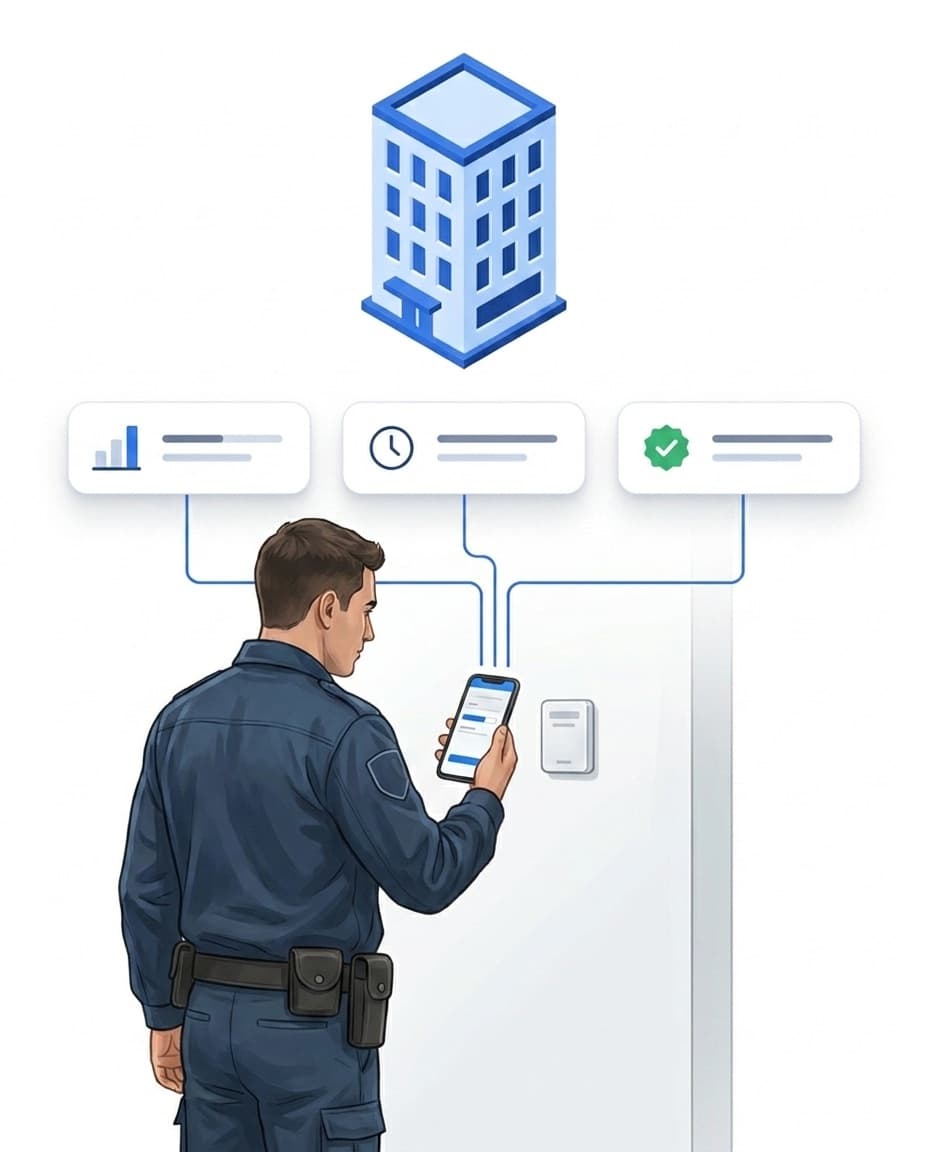
Internally, a three-stage indicator (healthy, watch, critical) shows during the period whether a contract is approaching its breach point – your client only sees the final result.
- ✓Watch threshold per promise: the early warning fires before the target is breached – time to intervene.
- ✓Wired to automation: when a target breaks, the 'service level breached' trigger fires in your automation rules – notification via push, e-mail, SMS or phone call.
- ✓Never on the client document: the internal indicator does not appear on the service-level report.

The report: produced automatically, archived revision-safe
After the period closes, LiteLog evaluates every active contract automatically and produces the service-level report as PDF/A (ISO 19005) – the standardised archive format for revision-safe long-term storage.
- ✓Target, actual, delta: per metric in one clear table, plus the overall status of the period.
- ✓Property drilldown: for a breached metric the report shows the properties with the largest deviations.
- ✓Automatic delivery on request: to the recipients stored on the contract – nobody has to chase down data at month end.
- ✓Immutable history: closed periods stay archived and retrievable at any time – per contract and per period.
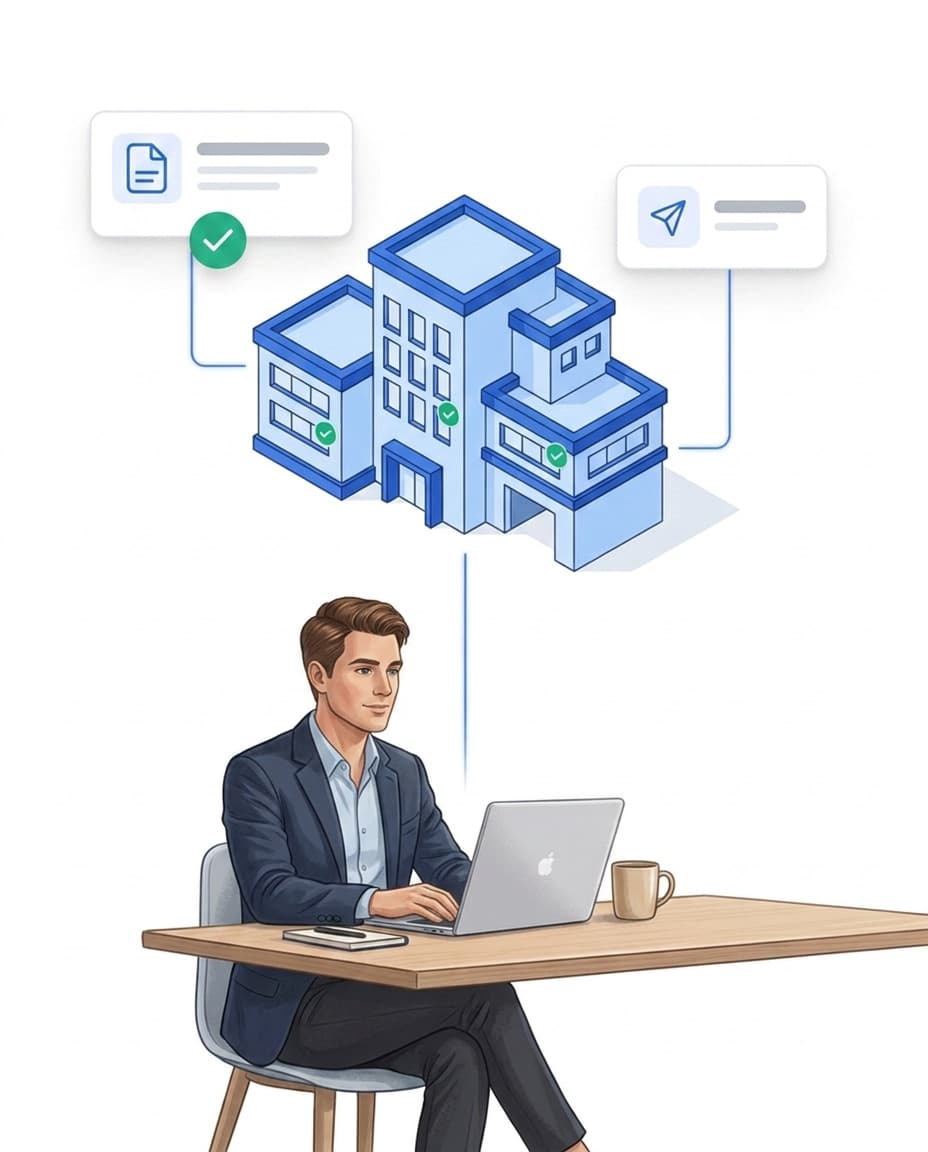
The SLA early-warning chain
The service-level report does not just document – it warns. When a target breaks, a freely adjustable workflow fires: you decide who is informed and when – your management learns about it during the month, not in the report.
FAQ
Frequently asked questions about service-level reports (FAQ)
What is a service-level report?
A service-level report is the periodic proof to the client that the services agreed in the contract were actually delivered. In the security and facility-services industries it is usually produced monthly and shows target and actual values for the key contract metrics.
What is the difference between an SLA and the service-level report?
The service-level agreement (SLA) is the contract that defines the targets. The service-level report is the periodic document that shows whether those targets were met. Both belong together, but they are two different documents.
Which metrics does LiteLog measure automatically?
Ten operational metrics: four completion rates (shift fulfilment, patrol completion, punctuality, checkpoint coverage), five absolute thresholds (missed shifts, missed patrols, late check-ins, open shifts, unreached checkpoints) and the average response time to incident reports in minutes. Per contract you choose which promises apply and set each target.
Is the report sent automatically?
On request. Enable automatic delivery on the contract and store recipients, and LiteLog sends the service-level report by itself after every period close. Without automatic delivery the report stays available in the portal for download at any time.
Do closed periods stay editable?
No. Once a period is closed, its results are stored immutably. If a correction to the underlying data comes in later, an updated service-level report is produced – so the proof stands up to a later audit.
What happens when there was nothing to measure in a period?
If, for example, no shifts or patrols were scheduled, a metric cannot be judged. LiteLog then marks the period as not evaluable instead of falsely claiming 'met' – which keeps the report trustworthy.